Wednesday, April 13, 2016

Project

We are starting the quarter with a project. The purpose of the project is to try to persuade the consumer that we should start using the renewable fuel of biodiesel to better our future atmosphere and air quality. In order to provide the best material possible I will provide kinks down below to take a look at.

http://biodiesel.org/

https://www.fueleconomy.gov/feg/biodiesel.shtml

http://www.afdc.energy.gov/fuels/biodiesel.html


Tuesday, April 12, 2016

About Biodiesel

Biodiesel is a fuel made from soy as well as animal fats

Biodiesel reduces greenhouse gases by 86%

Stimulates the economy

Reduces Caarbon dioxide in the atmosphere

Is a recycled fuel

Creates jobs in the United States


http://www.alternative-energy-news.info/technology/biofuels/biodiesel-fuel/


http://www.ebb-eu.org/biodiesel.php

Thursday, March 17, 2016

Hybridization

Hybridization is the idea that atomic orbitals fuse to form newly hybridized orbitals, which in turn, influences molecular geometry and bonding properties. At first, it was a slightly challenging concept to grasp. But with practice, it became easy and I began to realize the patterns that never change.


https://www.khanacademy.org/science/chemistry/chemical-bonds/copy-of-covalent-bonds/v/sp3-hybrid-orbital-jay-final
https://chemistry.boisestate.edu/richardbanks/inorganic/bonding%20and%20hybridization/bonding_hybridization.htm

Chemical Bonding Lab

In this Lab we were to apply our skills that we had learned from lecture in the previous days about Lewis structures and electron geometry. Electron geometry is just the type of format of the covalent bond based on the number of domains. I will provide material below to further expand your knowledge from this lab.

lone pairs explained 

Domains Explained 


Wednesday, March 16, 2016

Lewis Structure

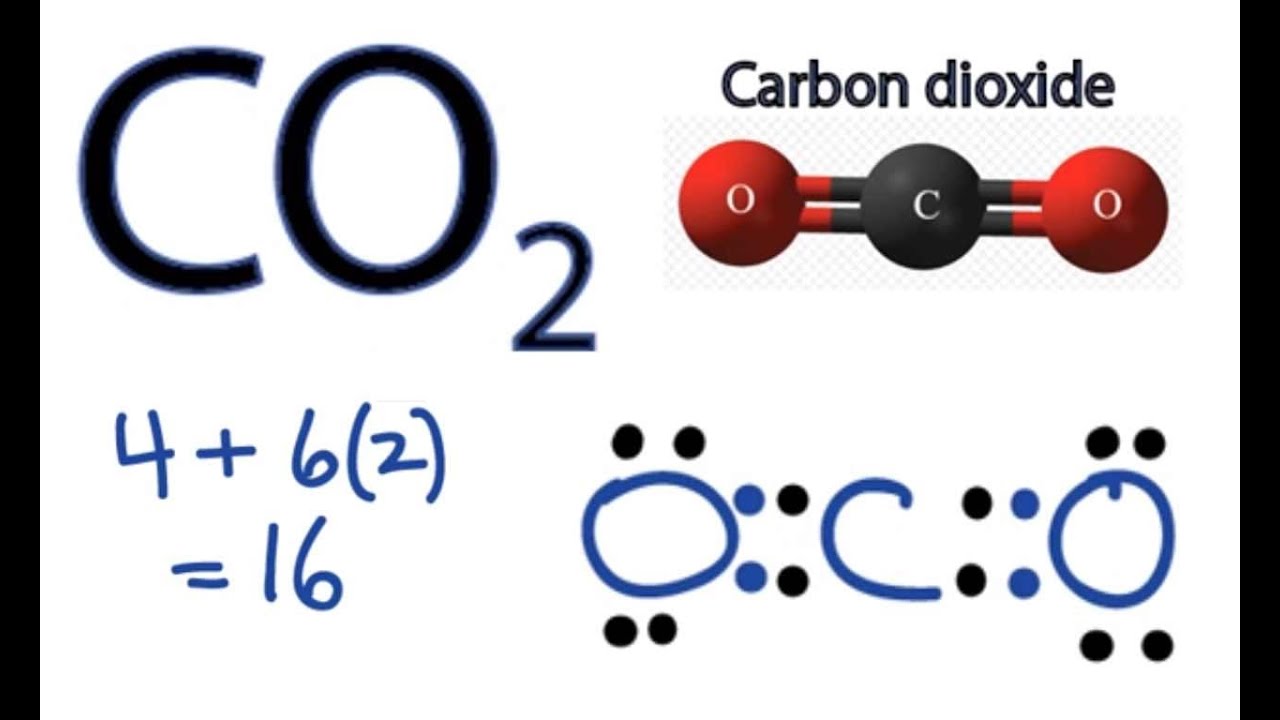
The Lewis structure is a representation of chemical bonds and elements based on its valence electrons. Many of theses diagrams are used to help diagnosis the electron geometry of the covalent bond. Any easy way to do these structure is count all the the electrons in the atom, place least electronegative element in the center, and place electrons throughout the bonds.

 
Octet Rule

http://socratic.org/questions/how-many-valence-electrons-are-in-bromine
Co2 Dot structure Video

Wednesday, March 9, 2016

Periodic Trends

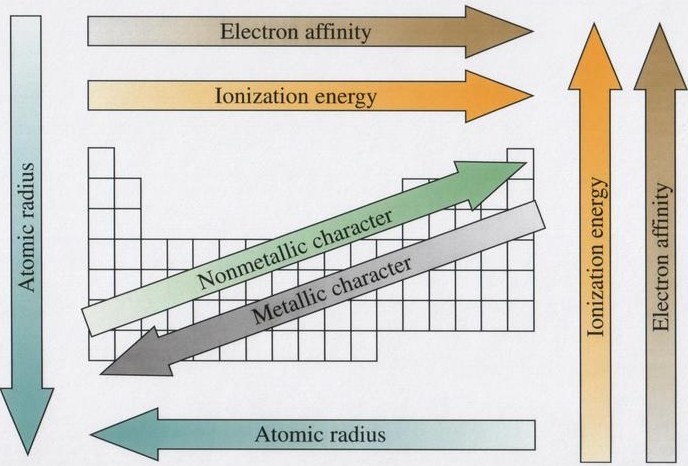
We learned periodic trends, and putting them to practice with a few activities. The first trend is atomic size, where atoms get larger because you move down a group, and also get bigger as you move from right to left, leaving the largest atoms in the bottom left corner. The next trend is ionization energy, which is the energy needed to remove an electron from a gaseous state atom, and it results in forming a cation. This trend is at its greatest in the top right. The third trend regarding only the s and p blocks, along with the two previous trends is electron affinity, which is the ease with which an electron may be added to an atom, creating an anion, otherwise, the energy given off when an electron joins an atom, and this gives off negative energy. This trend is also at its greatest in the top right. The final trend we learned about in our supplement is electronegativity, which is the tendency of an atom to draw electrons toward itself when chemically combined with another element, and this is greatest to the right and up, but does not include noble gases. 
This overall demonstrates all the trends:


Here are some practice links:
http://www.acschools.org/cms/lib07/PA01916405/Centricity/Domain/362/Periodic%20Trends%20Worksheet%20Answers.pdf
http://www.sfponline.org/uploads/71/periodictrendspracticesub1106.pdf

Monday, February 29, 2016

Quantum Numbers

Each element in every atom is assigned a set of four quantum numbers and no two electrons can have the same quantum numbers.
1. The first number is the principle quantum number which is the principle energy level.
2. The second number is the angular momentum quantum number which is the sublevel but the sublevels are assigned number. 0 is s, 1 is p, 2 is d, and 3 is f.
3. The third number is the magnetic quantum number which is determined by how much of the orbitals are filled
4. The fourth number is the quantum spin number which is either +1/2 if its the first electron in an orbital or -1/2 if its the second.
This link has practice problems with the answers so you can check if you get it right.